
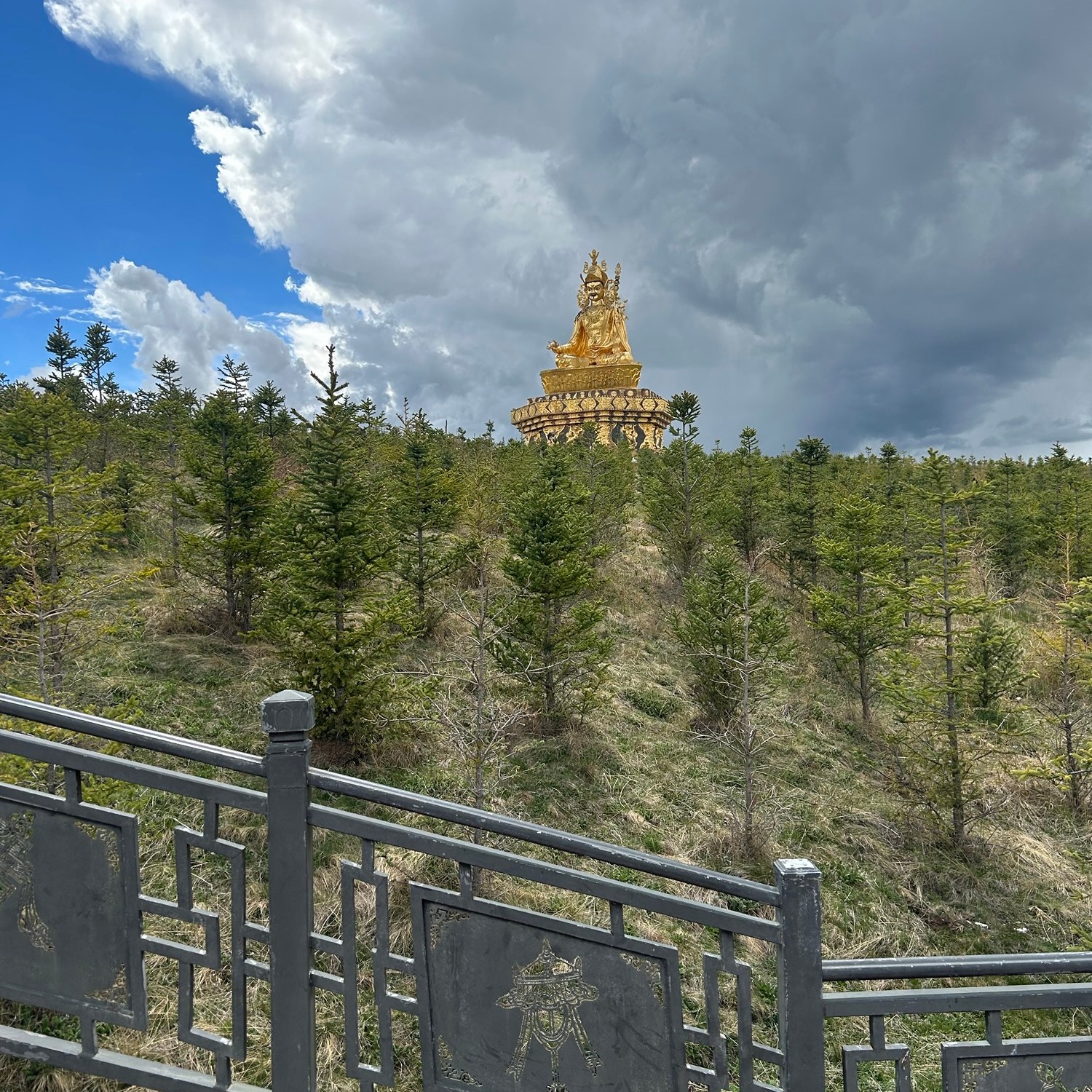
When I was in Garze county (the exact location isn’t coming up in my photos) we went to a large temple site, it was a huge place with temples made of gold and gold statues. On the way out we were driving up to a building and I could see a figure in Tibetan clothing standing in our bus and when I looked over it disappeared. Then we realised we had come to the funerary site where bodies are left out for the vultures to eat.
So it made sense I had seen a ghost at this site. I didn’t say anything and we didn’t want to take photos because it is not the best place to take photos. We turned around and left going to the highway exit a short distance away. So I learned that Tibetan’s in Tibet are normally called western Tibetan’s and the ones in Sichuan are eastern Tibetan’s and the ones in Qinghai I can’t remember what they are called. The term used is like a clan term as opposed to the word Tibetan but my memory evades me.
From my travels in these three provinces I have seen the differences to some extent. In Qinghai I saw small villages and a lot of herders who seem more nomadic in that they follow herd routes. I am sure they have a seasonal set of coordinates. In Tibet I noticed painted rocks with ladders and a lot of prayer flags for burial locations and places of worship. In Sichuan I noticed a lot of rock carving of prayers and some paintings of prayers around carving sites. There were also burial sites in Sichuan; I didn’t notice as many in Qinghai. Qinghai has a large Chinese Muslim population and they are in the valleys.
One stand out thing I noticed was the eastern Tibetan’s were quite wealthy in general and that might be due to the internal tourist trade in China but I can’t say exactly. There were a lot of big Tibetan homes that were quite grand in the Sichuan countryside. A lot of pockets of scenic spots tucked away with elaborate villages. I was surprised because I didn’t see that in Tibet itself, even less so in Qinghai.

